
The more I have studied health, wellbeing, disease, and human experience, the more I have found myself returning to a deceptively simple question:
What is normal?
It is a word we use every day.
Your test results are normal.
Your reaction is normal.
This is normal for your age.
This is normal in your culture.
This is normal in your family.
But have we ever stopped to ask what we actually mean by normal?
One of the most fascinating observations I have encountered throughout my research in the Philosophy of Health and Wellbeing is that normality is rarely as fixed or objective as we imagine it to be.
What is considered normal for one person may be experienced very differently by another.
What is considered normal within one culture may be questioned in another.
What is accepted as normal within a family, a profession, or a society may not necessarily support wellbeing, growth, or flourishing.
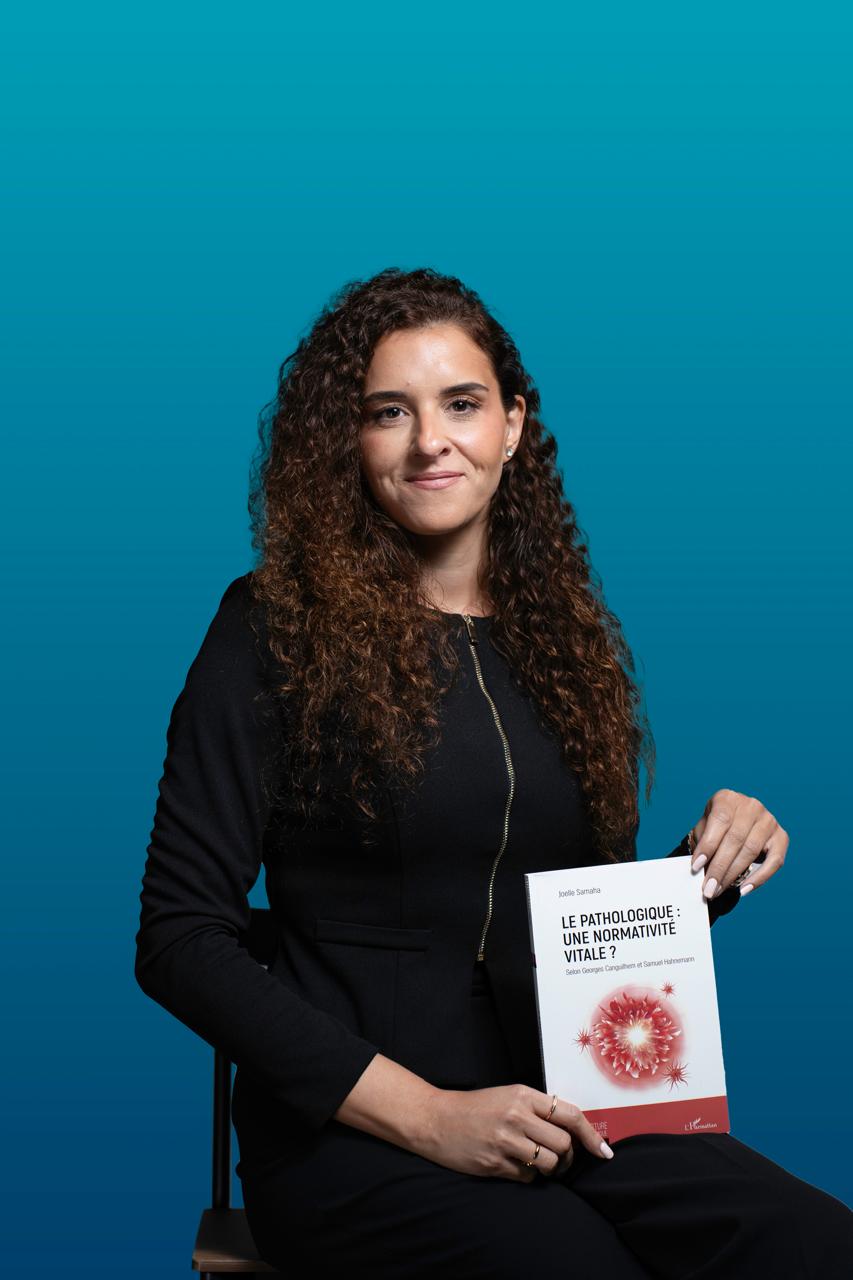
For many years, I have been interested in the concepts of health, disease, normality, and pathology. These questions became central to my doctoral research and later to my book Le pathologique : une normativité vitale ?
As I explored these concepts, I found myself repeatedly reflecting on a tension that continues to shape my thinking today.
On one hand, we need standards.
We need medical knowledge, diagnostic criteria, scientific evidence, and statistical references. These play an essential role in helping us understand health and disease.
On the other hand, human beings are not statistics.
We do not experience life as averages, percentages, or data points.
We experience life from within.
And sometimes what is statistically common may not necessarily feel right.
This perspective was profoundly influenced by the work of Georges Canguilhem, whose reflections on the normal and the pathological challenged the idea that health can be reduced solely to statistical averages or biological measurements. He proposed that health is not simply conformity to a norm, but also an individual’s capacity to adapt, respond, and establish new norms in relation to life’s challenges.
Chronic stress has become normal.
Living in a constant state of urgency has become normal.
Poor sleep has become normal.
Emotional exhaustion has become normal.
Being disconnected from ourselves has become normal.
Yet their prevalence does not automatically make them beneficial.
One of the difficulties with the concept of normality is that it can easily become confused with familiarity.
The fact that something is common does not necessarily make it desirable.
The fact that something is socially accepted does not necessarily make it beneficial.
And the fact that something has always been done a certain way does not necessarily make it the best way to live.
History is full of examples of practices, beliefs, and social norms that were once considered entirely normal and are now viewed very differently.
Perhaps normality should not be understood as an endpoint but as a starting point for reflection.
A reference rather than a verdict.
A description rather than a prescription.
This is one of the reasons I remain fascinated by the question.
Not because I am searching for a definitive definition of what is normal, but because the question itself invites us to think more carefully about how we understand ourselves, our lives, and the assumptions we rarely stop to examine.
Perhaps that is where philosophy begins.
And perhaps it is also where meaningful change begins.
Dr. Joelle Samaha, PhD, PCC
Researcher in the Philosophy of Health & Wellbeing, ICF-PCC Health Coach, Host of the Let’s Get Real 2 Heal Podcast, Author of Le pathologique : une normativité vitale ? (L’Harmattan), and Founder of PhiloLife Wellbeing Education Center.
References
Canguilhem, G. (1991). The Normal and the Pathological (C. R. Fawcett & R. S. Cohen, Trans.). New York: Zone Books. (Original work published 1943/1966).
Samaha, J. (2022). Le pathologique : une normativité vitale ? Selon Georges Canguilhem et Samuel Hahnemann. Paris: L’Harmattan.